Skip to Content

A connected business platform for equipment and cosmetics suppliers

We help connect your own website, enquiries, sales and work after delivery. For equipment, including lasers, we account for selection, configuration approval, installation, training and service. For cosmetics and consumables, we cover the range, repeat orders, availability and receipt of goods.

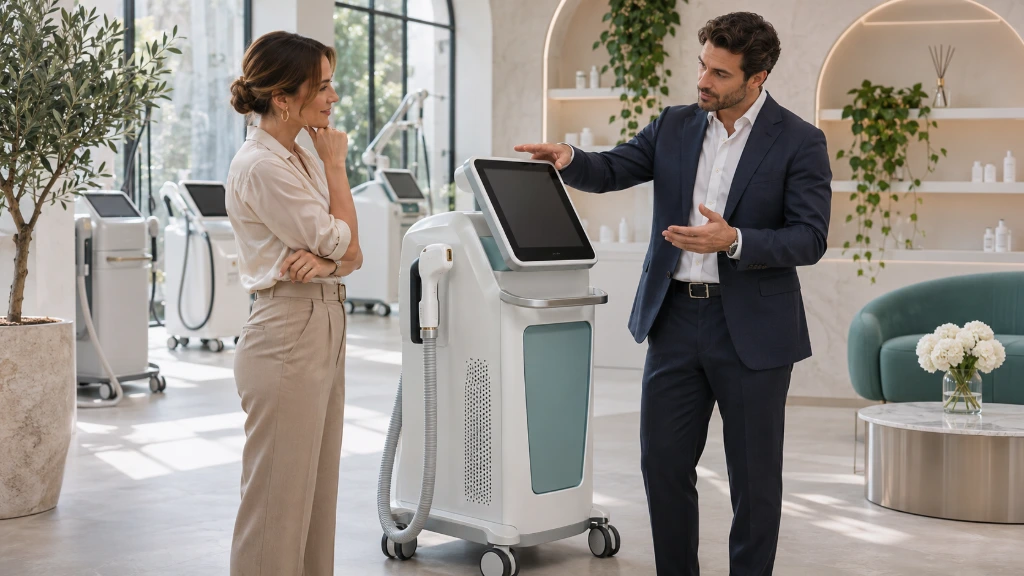
Illustration of a supplier and buyer discussing cosmetic equipment in a showroom
Illustrative scene — not a pNet customer project.

Where the process breaks

The supplier’s challenges

Connect the catalogue, sales team, delivery and subsequent service in one process.

About the platform

One buyer compares a device, requests documents and discusses terms with a manager. Another already knows the item number and wants to reorder. The same shopping cart does not solve both tasks.

pNet helps present your range and configure a suitable path for each type of purchase. The team sees the current agreement, the source of product data and the owner of the next step. Your platform uses your domain and agreed rights to data, materials and access, taking licences and external services into account.

Using the pNet Business Platform and Odoo we assemble an agreed process: your website and catalogue, a CRM with owners for enquiries, proposals and orders, selected inventory and financial operations, and after-sales service. You do not have to replace an existing ERP automatically: we first check the source of product data and possible exchange. Models, serial tracking, licences and actual integrations require verification.

For equipment the path includes model → consultation → proposal version → confirmed order → delivery → installation and training if agreed → acceptance and service. For consumables the emphasis is on variant/batch → current availability → repeat order → picking → shipment and documents. Payment information, physical movement of goods and service work keep separate states; AI does not decide equipment compatibility or safety.

pNet Business Systems connect the website and the team's actions; Infrastructure provides the agreed hosting and support.

Odoo and CRM provide the selected records and roles; data integration connects working systems; hosting and monitoring support availability; SEO helps buyers find the right range. After launch, pNet continues to support the system, catalogue updates and agreed development.

  • Quotes are assembled across messages

    Models, options and conditions change across separate emails.

  • Delivery is not the end of the work

    Installation, acceptance and training continue after delivery.

  • Every repeat order starts from scratch

    The buyer looks for the item; the team searches for the previous purchase and confirmed compatibility.

ORDER JOURNEY

From enquiry to delivery and service

Equipment and repeat consumable purchases follow different paths.

  1. 01

    Enquiry

    Model, need and documents

    Enquiry
  2. 02

    Proposal

    Configuration and terms

    Agreement
  3. 03

    Order

    Confirmation and availability

    Order
  4. 04

    Delivery

    Dispatch and receipt

    Fulfilment
  5. 05

    After delivery

    Installation, training and service as agreed

    Ongoing work
An item is unavailable or payment is delayed?

The manager agrees timing and terms with the buyer; changes to a proposal or partial delivery are agreed separately.

Dispatch is not acceptance.

Connecting the right steps

Two buying paths

Equipment

Details of this path
  1. A specific enquiry Clarify the model and terms. The buyer reviews specifications and discusses installation and training.
  2. Agreed configuration and quotation Commercial proposal. The configuration, conditions, timing, price and owner are agreed.
  3. Delivery and serial number Confirm order and fulfilment. Stock, serial numbers, delivery, documents and payment status are checked.
  4. Installation, training and service Delivery and service. Agreed commissioning, training and service take place, and the result is recorded.

The team tracks the delivery scope and outstanding work. The website helps a buyer understand the purpose, configuration and terms, then passes the enquiry to a manager. A specialist clarifies the need and prepares the appropriate version of a proposal. An accepted proposal provides the basis for an order, but does not yet mean reservation, payment or readiness to ship. Reservation, invoicing, payment and delivery are then tracked separately. If installation, training and acceptance are included in the agreement, each stage has conditions and an owner. A serial number connects an individual unit to its history. A service request continues the journey after handover. Note: An agreed proposal is not yet a shipment, and a consumables order is different from a complex equipment delivery. Serial numbers and batches require their own rules.

Consumables and cosmetics

Details of this path
  1. Item number or order history
  2. Check availability, price and compatibility
  3. Confirmed order
  4. Dispatch by batch

The buyer can reorder using verified information. The buyer finds the product variant, packaging and terms available to them. The order is checked against availability and reservation rules, then payment, fulfilment and receipt are tracked. A repeat purchase uses the current range rather than copying an old price and stock level without verification. For a return, the reason, product condition, stock action, document adjustment and refund are checked separately. If payment arrives after a reservation expires, the team receives an exception to resolve; goods are not promised automatically.

Recommended modules

Connect the team’s work

  • Catalogue and website

    The buyer makes a specific enquiry and the seller can see its context.

    More details

    Models, packages, documents and separate paths for equipment and consumables. We prepare the structure of your range, specifications, variants and approved documents. Complex equipment gets a clear selection enquiry; suitable repeat purchases get a shorter ordering path. Technical information comes from agreed manufacturer sources. A catalogue that leads to a clear enquiry. Equipment and consumables are presented with different purchase rules.

  • CRM and enquiries

    A new enquiry is less likely to get lost between email, showroom and demonstration.

    More details

    Enquiry source, model, responsible salesperson and next action. We connect an enquiry to the organisation, contacts, product and owner. The equipment user, purchaser and payer may be different people. Conversation history helps the team continue without repeatedly collecting the same information.

  • Sales and quotations

    The team and buyer discuss the same delivery scope.

    More details

    Equipment, options, delivery, installation and training in a quotation version to be agreed. We organise configurations, proposal versions, terms and order acceptance. A change to the configuration, price or service scope requires renewed agreement. Sent does not mean accepted by the customer. A proposal that continues into an order. Approval, availability and delivery remain distinct.

    An accepted quotation, reservation, invoice and payment are separate events.

  • Inventory, batches and serial numbers

    A delivery and recipient can be found when a service question arises.

    More details

    Receipt, movement and dispatch with the equipment serial number or consumable batch. We configure the chosen inventory records, reservations and connection between a delivery and a particular batch or unit. We check partial deliveries and quantity discrepancies. Serial tracking alone does not mean a ready-made regulatory recall process or automatic blocking by expiry date.

    This does not automatically configure batch recalls or expiry-date blocking.

  • Purchasing and replenishment

    The salesperson checks the expected date against purchasing data instead of relying on an informal promise.

    More details

    A purchase request, supplier and expected arrival for the required item. We help connect requirements, suppliers and expected arrivals. We agree which data is confirmed and who can change a delivery date. A buyer should not receive a promise based on an unverified date in another system.

    Availability and timing are checked as part of the agreed project.

  • Service and on-site work

    The technician gets context and the coordinator can see unfinished installation work.

    More details

    A request linked to a serial number, the equipment history, visit and open work. We organise requests, specialist assignment, work and required documents. Equipment history helps prepare for a visit, but warranty decisions, safety and whether a repair is permitted remain with authorised people. The team can see after-sales service. Installation, training and equipment maintenance have assigned owners.

    An authorised specialist approves diagnosis, warranty and chargeable work.

  • Customer training

    The team can see what has been handed to the customer and which steps remain.

    More details

    Materials, instruction and agreed completion records after delivery. We connect agreed training to the delivery, identified participants and materials. Attendance, viewing instructions and skills assessment are tracked separately. A completed course does not automatically confer authorisation to operate equipment or a regulated qualification.

    A course record does not automatically confer permission to operate equipment.

  • Invoices and accounting exchange

    Dispatch and receivables work can rely on agreed information.

    More details

    Order, invoice and payment status, document contents and handover to the accountant. We configure the selected path from order to invoice and payment verification. We account for advances, partial payments and adjustments. Exchange format, taxes and responsibility for financial documents are agreed with your accounting team. Working accounting systems are retained. The new platform can exchange data with an existing ERP.

    The accountant confirms formats, localisation and responsibilities.

  • Email and repeat orders

    The buyer can return to an item and purchase history more easily.

    More details

    Order documents and separately agreed customer reminders. We prepare service messages for agreed stages and permitted reminders about repeat purchases. Marketing is not mixed with delivery notifications. Order changes or an advertising opt-out should promptly stop unsuitable messages.

    Marketing messages require an agreed lawful basis and an opt-out.

  • AI using approved materials

    A colleague can find the source document for an answer more quickly.

    More details

    Search technical documents and prepare internal drafts. An assistant finds the right instructions, specifications and administrative rules with a source reference. It can draft a response for a manager. Compatibility, suitability, warranty and conditions of use require specialist verification; AI does not make those decisions for them.

    Compatibility, warranty and suitability are decided by a specialist; a public bot is separate.

These are recommended components of an independent platform. Scope, integrations and special rules are agreed for your project. AI uses approved materials and drafts reviewed by a specialist.

FINANCE AND CONTROL

A proposal, an order and money are distinct

The team can distinguish agreed terms, actual payment and fulfilment.

EventWhat the team checks
ProposalConfiguration, price and version of terms
OrderBuyer confirmation and availability
Invoice and paymentDeposits, balance and receipt
Delivery and servicePartial delivery, acceptance and service request

Marketing activities

Help buyers find your expertise

Choose channels for the assortment and buying cycle.
ChannelWhat helps people chooseNext step

Search by model and task

Equipment and consumable pages and FAQs respond to specific enquiries.

Product page and enquiry

Expert material

Explain configurations, installation preparation and documents.

More details

Explain configurations, installation preparation and documents. For equipment, detailed pages, configurations, documentation, answers to questions and agreed demonstrations are useful. We help turn your team's expertise into materials that can be found in search and used in conversations with buyers.

Question for a specialist

Professional channels

Demonstrations and videos for dealers and specialists lead to your catalogue.

More details

Demonstrations and videos for dealers and specialists lead to your catalogue. For professional audiences we choose appropriate channels: expert publications and LinkedIn, demonstration videos, a profile for the real showroom and permitted communication with existing customers. For consumables, accurate product pages, variants and current reordering matter. The same materials can support the website, manager and marketing without three independent data sets.

Arrange a demonstration

Existing customer communication

Useful material and agreed reminders for repeat purchases.

Repeat purchase

Paid advertising — separate

Possible channels: Google Search as a candidate.

Goal: A specific enquiry, completed demonstration or accepted quotation.

Channels, product eligibility, access, measurement, management and budget are agreed separately; approval and results are not guaranteed.

More details

Channels, product eligibility, access, measurement, management and budget are agreed separately; approval and results are not guaranteed. First we decide what to advertise: equipment with a consultative sales cycle, delivery-related training or an available repeat-purchase product. We then prepare the page, materials, geography and measurement. For equipment, we assess enquiry quality and progress towards an agreed order rather than calling every click a sale. Before launch we check category rules, rights to materials, platform and account access, delivery capacity and the team's ability to respond. Setup, ongoing management and the external budget are agreed separately. Rankings, enquiry counts and return on investment are not guaranteed.

pNet stages

Start with one real process

  1. 01

    Understand the team's work

    Clarify roles, data and the first process.

    Stage details

    The boundaries and owners of the first scope. If your product and financial records already work reliably in your system, we start with its role and available interfaces. We establish the authoritative source for price, stock, customer and document data, then design the necessary exchange. We examine one typical equipment order and one repeat purchase. We agree data, roles, terms and the first scope, then prepare pages, settings and necessary connections. Together we check a proposal change, partial delivery, late payment, return and handover of a service request.

  2. 02

    Set up the first process

    Connect the catalogue, enquiry and team workflow.

    Stage details

    An agreed route from enquiry to operation.

  3. 03

    Check and hand over

    Check exceptions and hand the solution over.

    Stage details

    Check unavailable stock, incomplete information and open work before deciding on launch. CSV can help with a limited transfer, but does not replace checking relationships, history, attachments and permissions. We do not promise a universal connector to every ERP. Sometimes the best first stage is a good catalogue and a confirmable enquiry without automated sales. After launch, we help support the system, update the range and materials, and develop selected processes and marketing. Support has agreed boundaries and a change process; complex industry decisions remain with your team.

Questions before we start

Do we need an online shop immediately?

No. For equipment, a catalogue with qualified enquiries and managed proposals is often more useful. We add direct purchase where availability, terms and fulfilment are clear.

Does a serial number resolve every warranty question?

No. It helps connect a specific piece of equipment to its history. An authorised specialist checks the warranty basis, contract terms and decision on a request.

Can we keep our existing ERP?

Yes. We first establish its role, available exchange and permissions. Replacing the accounting system is not a prerequisite for a new website.

Must every product be visible at one price?

No. We choose a public catalogue, professional access or individual proposals to fit your work. Access to terms and documents is checked separately.

Can compatible consumables be recommended automatically?

Only using an appropriate confirmed source and verified rules. When data is insufficient, the enquiry goes to a specialist rather than being closed with a confident guess.

Does the platform replace operator training and authorisation?

No. It supports materials, organisation and recording the selected stages. A person's qualifications and permission to operate equipment are determined separately.

Can we keep our ERP and accounting system?

Yes, that can be the right starting point. We define data ownership and the necessary exchange first, then check the actual interfaces. A connector to every system is not assumed.

Must prices be public?

No. We can assess an open information catalogue with an enquiry route, or authorised professional conditions. Dealer access and mixed B2B/retail rules need their own checks.

Does the platform certify equipment users?

No. It can organise materials, sessions and records. Applicable competence, training and operating requirements are confirmed through the responsible people and required evidence.

Can AI select compatible items or approve warranty automatically?

Those decisions stay with the responsible specialist. We can assess document search and drafts with controlled access and explicit handling of uncertainty.

Can we move our data later?

We agree what must be exported and test the relevant export and recovery path. Files, attachments, history and relationships need attention; a CSV alone is not a complete migration.

What is included in a project?

We agree a concrete first workflow and its checks. Migration, extensions, ongoing content, advertising, licences and external services are specified separately where needed.

What should become easier in your company?

Tell us what you supply and how enquiries, quotations and service work today. Tell us what you supply, where records are kept today and which handoff loses time. We will identify a useful first step, from catalogue and enquiry to a selected delivery or repeat-purchase process.

Discuss the project ↗